
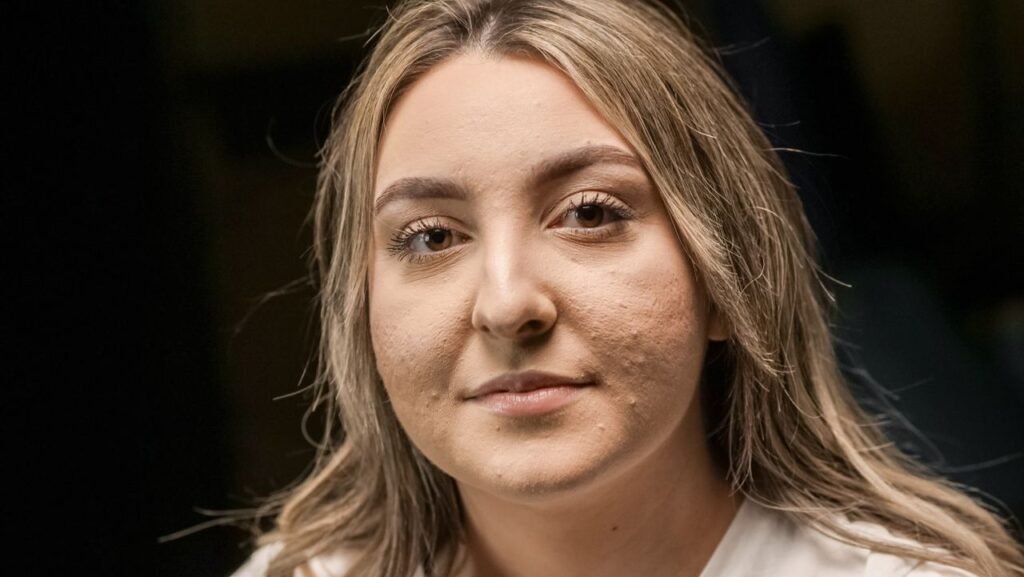
Acne Marks or Acne Scars?
Why the Difference Changes Your Treatment
Not every mark left behind after a breakout is a scar. Some are changes in colour; others are permanent changes in skin texture. Treating them as though they are the same can waste time, irritate the skin and make discolouration worse.
Before buying another “scar serum” or booking a strong procedure, identify whether the problem is colour, texture – or both.
The Right Diagnosis Changes the Entire Plan
- Flat marks need pigment control.
- Indented or raised scars need structural treatment.
Acne Marks vs Acne Scars: The Simple Test
Acne marks are usually flat. The skin may look red, pink, purple, brown or darker than your usual skin tone, but the surface still feels smooth.
Acne scars change the texture. They may look indented, pitted, wavy, thickened or raised because inflammation has damaged the skin’s supporting structure or produced excess scar tissue.
Run a clean finger gently over the area in good side lighting. If the surface is level but the colour differs, it is more likely a mark. If you can see or feel a depression or raised area, scarring is more likely. Many people have both.
The Two Main Types of Post-Acne Marks
Post-inflammatory hyperpigmentation (PIH)
Brown, grey-brown or dark marks caused by increased pigment after inflammation. PIH is particularly common and persistent in brown and black skin, and may become darker with UV exposure.
Post-inflammatory erythema (PIE)
Flat red, pink or purple marks linked with changes in small blood vessels after inflammation. These are not melanin-based dark spots, so pigment-lightening products may not be the right answer.
The Main Types of Acne Scars
Ice-pick scars
Narrow, deep pits that look as though the skin has been punctured. Surface-only treatments may not reach their depth.
Boxcar scars
Round or oval depressions with more defined edges. Their depth and attachment determine the most suitable approach.
Rolling scars
Broad, shallow undulations caused by fibrous bands beneath the skin, producing a wavy appearance in side lighting.
Hypertrophic or keloid scars
Firm, raised scars caused by excess scar tissue. These require a different strategy from indented scars and should not be treated casually with standard resurfacing.
First Rule: Control Active Acne
Treating scars while new inflammatory acne continues is poor strategy. Every new nodule or cyst can create another mark or scar, while aggressive procedures may aggravate active inflammation.
Mild acne may respond to pharmacy advice and evidence-based topical treatments. Speak to your GP if acne is moderate or severe, painful, not responding to pharmacy treatment, causing scarring or affecting your mental health. Early control reduces the risk of further permanent scarring.
What Helps Flat Acne Marks?
The foundation is gentle skincare, control of active breakouts and consistent broad-spectrum sunscreen. UV exposure can deepen PIH and slow visible improvement.
Depending on the type of mark and your skin tolerance, a plan may include azelaic acid, a retinoid, vitamin C, niacinamide or carefully selected exfoliating acids. Introducing too many actives at once can damage the skin barrier and create more inflammation.
Superficial chemical peels may help selected pigment concerns, but stronger is not automatically better. In skin prone to PIH, an excessive peel can replace one dark mark with a worse one.
What Helps Indented Acne Scars?
Creams may improve colour and overall skin quality, but they cannot rebuild every deep structural scar. Procedures may include microneedling, subcision, laser resurfacing, punch techniques or carefully selected peels. Different scars often require different methods, and combination plans are common.
Microneedling can support collagen remodelling and may improve selected shallow or rolling scars over a course of treatments. It is not the perfect answer for every ice-pick, tethered or raised scar. Infection, prolonged redness, pigment change and scarring are recognised risks.
Subcision is a surgical procedure used for selected tethered rolling scars. Deep ice-pick scars may need specialist punch techniques or focal treatments. These are not interchangeable with a routine facial.
Can Acne Scars Be Removed Completely?
No reputable practitioner should guarantee completely scar-free skin. NHS guidance states that treatment can improve the appearance of acne scars but cannot remove them entirely.
A realistic goal is softer edges, shallower depressions, a more even overall texture and less contrast in different lighting. Results depend on scar type, depth, skin tone, active acne, treatment choice and healing response.
Why Picking Makes Everything Worse
Picking and squeezing increase inflammation, damage surrounding tissue and raise the risk of infection, PIH and permanent scarring. If you repeatedly pick without meaning to, hydrocolloid patches and keeping nails short may create a useful physical barrier while the acne itself is treated.
How Long Do Results Take?
Flat marks may fade gradually over months, although deeper PIH can last longer. Structural scar improvement is slower because collagen remodelling takes time, and a course of treatments may be needed.
Photograph progress every four weeks in the same position and lighting. Daily mirror-checking is unreliable and often makes gradual improvement impossible to notice.
When Should You Avoid a Cosmetic Procedure?
Important Considerations
- Active infection or inflamed acne in the treatment area
- Recent sunburn or a damaged skin barrier
- A history of keloid scarring without appropriate assessment
- Pregnancy when the proposed product or procedure is unsuitable
- Current or recent medicines that affect healing or procedure safety
- Unrealistic expectations of complete scar removal
Always disclose medical conditions, allergies, previous reactions, active skincare and all medicines. If you use or recently used isotretinoin, obtain individual advice before booking a procedure; timing should not be guessed from social media.
Acne Mark and Scar FAQs
Can microneedling remove dark marks?
It may improve selected concerns, but it can also worsen PIH if the skin is inflamed, the settings are unsuitable or aftercare is poor. Flat pigmentation may be better approached with acne control, sun protection and targeted skincare first.
Do pores become acne scars?
Enlarged pores and shallow scars can look similar, but they are not identical. An assessment in side lighting helps identify the dominant issue.
Can one treatment fix mixed scarring?
Usually not. Ice-pick, boxcar, rolling and raised scars respond differently, so staged or combination treatment may be needed.
Should I wait until acne clears?
Active acne should be controlled before focusing on elective scar procedures. Otherwise, new scars may continue forming while old ones are treated.
Acne Scar Consultations at Nidhi Aesthetics, Blackpool
At Nidhi Aesthetics, we start by identifying whether your main concern is active acne, flat discolouration, true scarring or a combination. This avoids selling a standard package for problems that require different approaches.
Looking for advice about acne marks or acne scars in Blackpool? Contact Nidhi Aesthetics to arrange a consultation and discuss a realistic, personalised plan. Where active or severe acne needs medical treatment, you may be advised to speak to your pharmacist, GP or dermatologist before cosmetic procedures.
Acne Marks or Acne Scars?
Arrange a consultation to discuss your skin concerns and a realistic, personalised treatment plan.
Book Your Consultation →